
September 22, 2026·4 min read
Intranet: The Extended Network
When I wrote about Intranet in May, the counter had stopped at 327 works. It felt like an expansive archive then: an accumulation of digital fragments, small loops that refused to settle down. But a network has a way of refusing to close its doors.
Four months later, the project has crossed five hundred pieces.
What happens when an archive doesn't stop? The language begins to shift. It doesn't replace what came before; it widens the aperture. The early office monitors, the dial-up dialogs, and the quiet desktop corners are still humming in the background, but now they share bandwidth with something faster: the sound of a V10 engine, the low neon hum of an arcade cabinet, the unmistakable silhouette of a car built when the century was still turning.

The Speed of Memory
Working within 640 by 480 pixels at 30 frames per second is an exercise in economy. You have very few pixels to convince the eye that something is heavy, that something is accelerating, that a piece of metal is tearing down an asphalt straightaway.
In the recent works, the focus turned toward an era of machinery that coincided with the golden age of the consumer web: the late nineties and early two-thousands. Youngtimer icons. The cars we drove in low-resolution polygonal racing games before we ever held a real steering wheel.
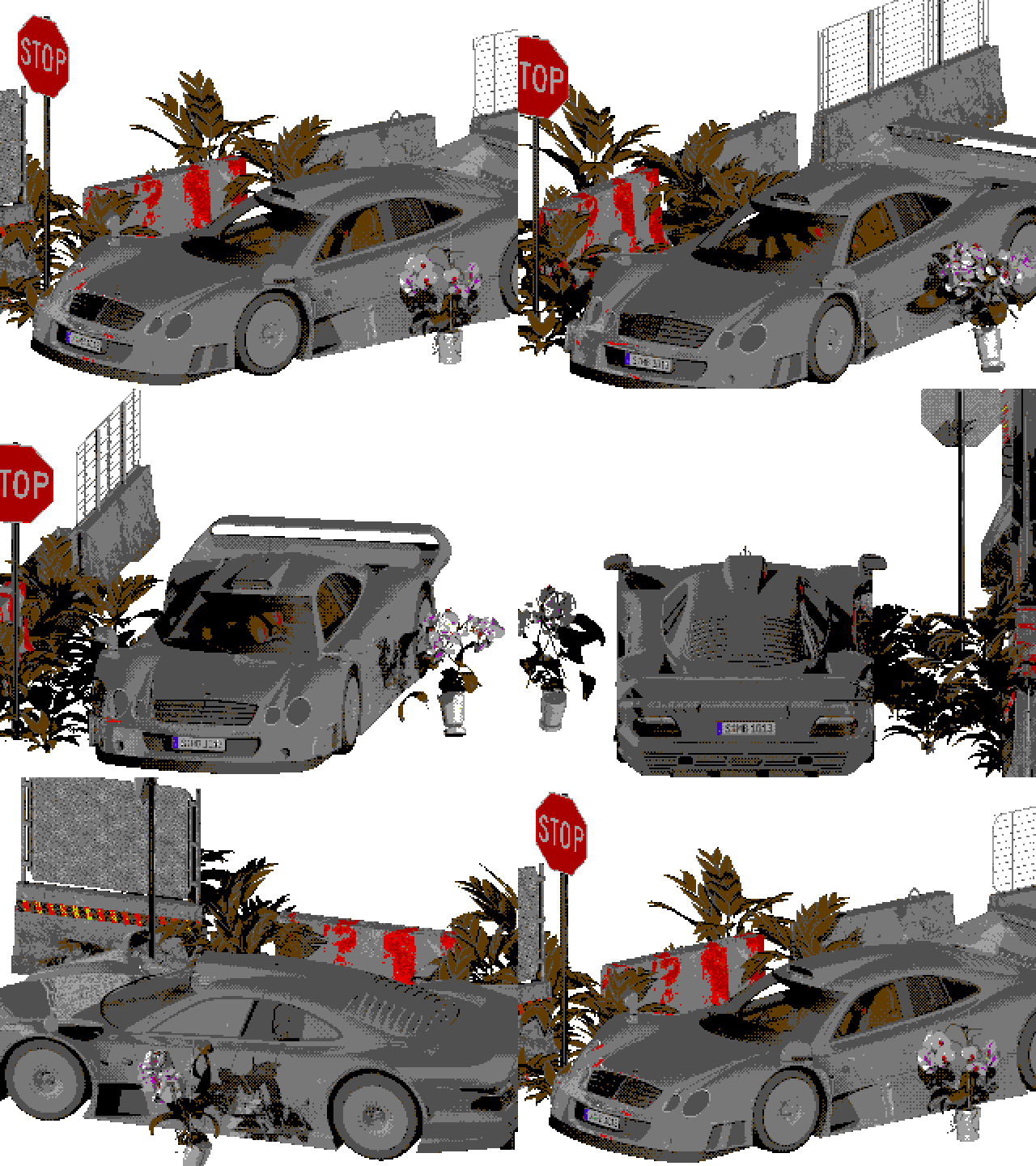
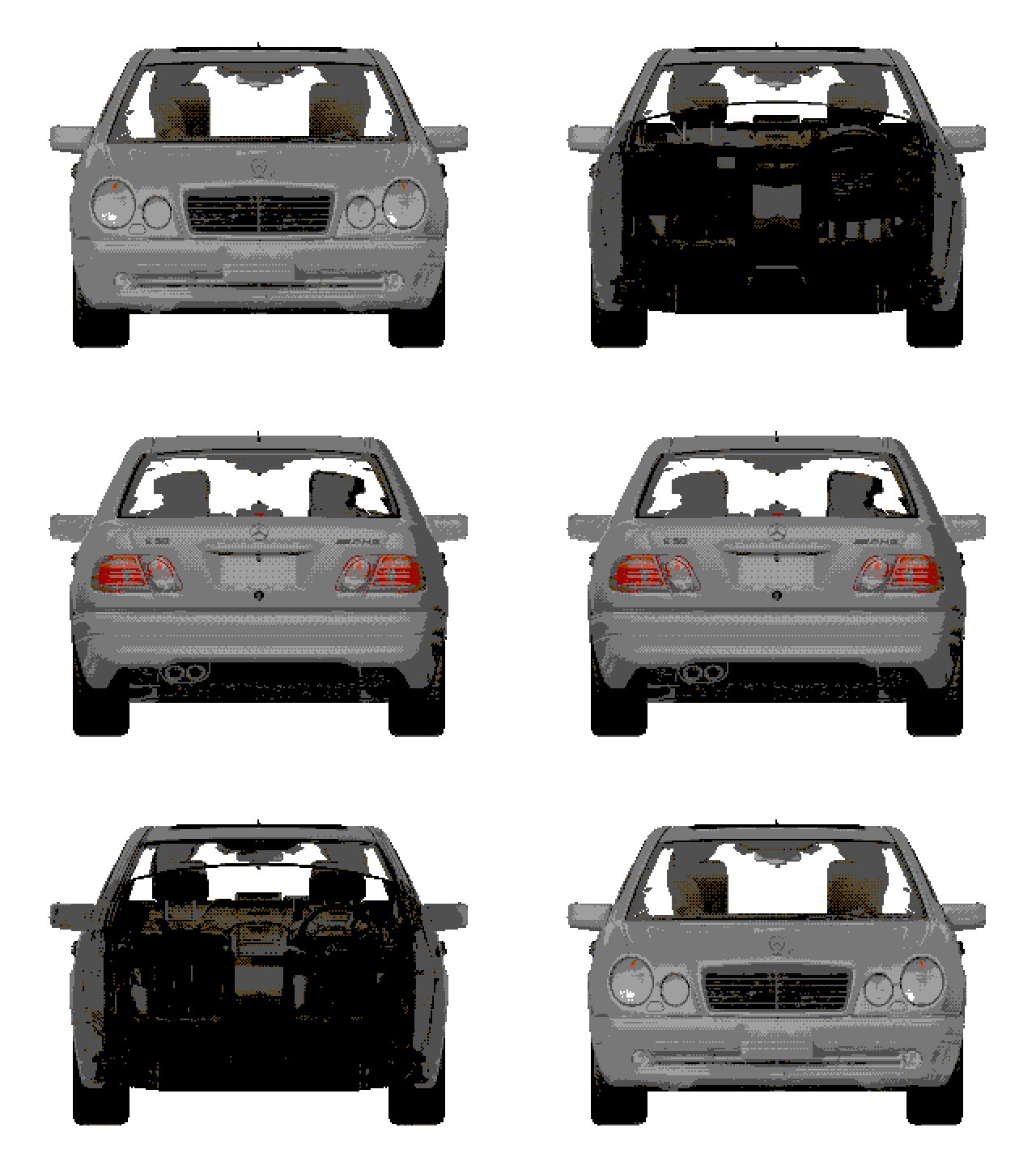
In Clk, the coupe emerges out of dithered dusk, its headlights cutting through the frame with the flat graphic immediacy of a magazine centerfold taped above a teenager's desk. In E50 AMG, the heavy German chassis doesn't feel simulated; it feels recorded, as though captured on an early digital camcorder with magnetic tape hiss still lingering in the margins.
These pieces are not car commercials. They are artifacts of how we encountered speed through glass: through CRT television sets, through VGA monitor scanlines, through demo discs mailed in cardboard sleeves.
The Grid in 2002
In August, a small trilogy formed almost unintentionally around the 2002 Formula 1 season: Ferrari 2002, McLaren 2002, and Sauber 2002.
Anyone who followed racing in those years remembers the specific texture of the television broadcasts. The low-bandwidth on-screen telemetry, the bright primary liveries, the harsh digital typography announcing split times across the bottom third of the screen.
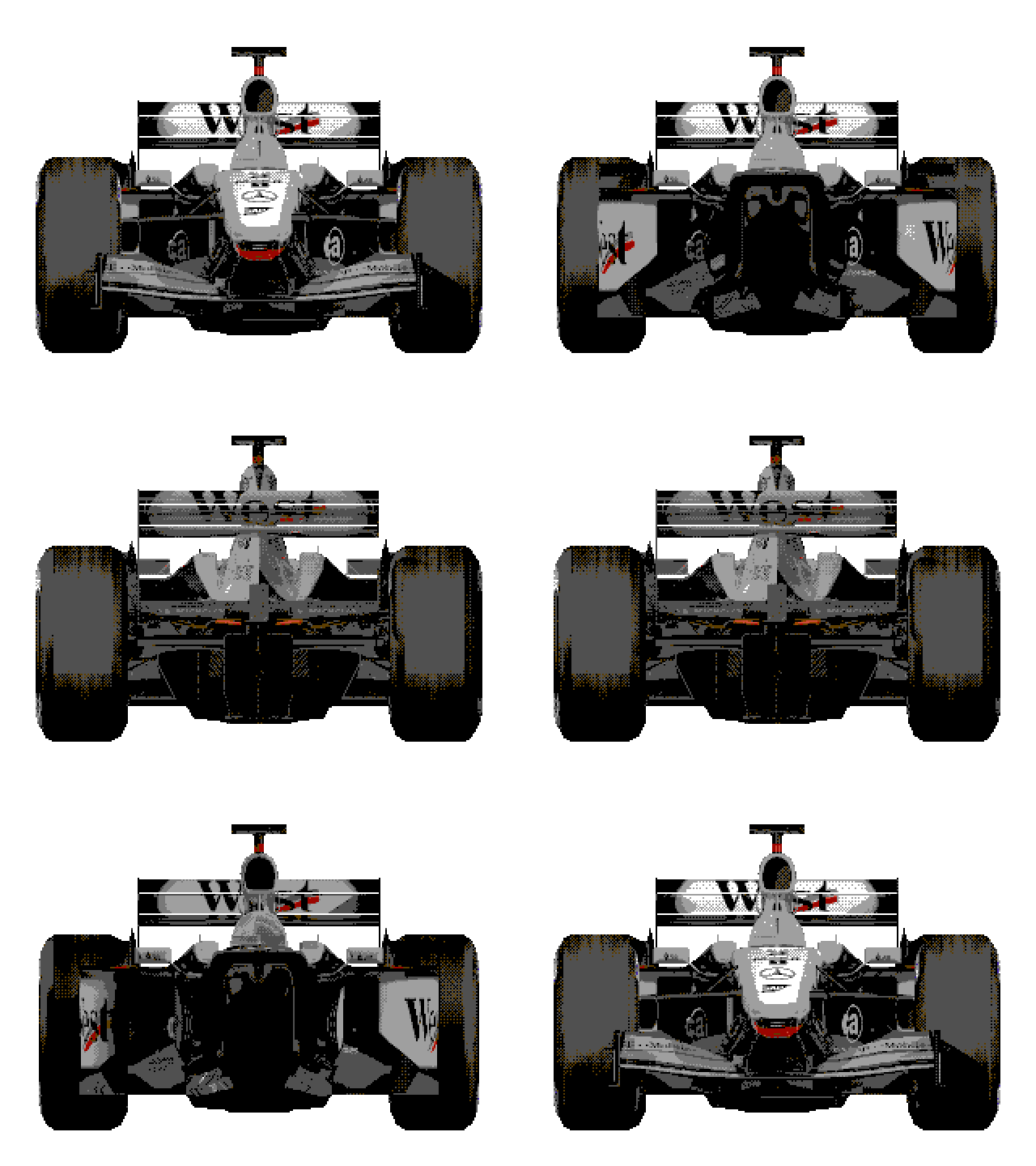
Translating that world into a 640x480 GIF loop strips away the photorealism and leaves only the essence of the gesture. A McLaren slicing across the frame, silver and black, locked in an eternal lap that neither finishes nor falters.
When these three works went to auction, something unexpected happened. They triggered an identical, quiet standoff among collectors: each piece received four bids, each closed at exactly twenty-five Tezos. The symmetry wasn't programmed into the contract. It came from the collectors themselves recognizing that the three belonged together, forming a triad of speed preserved inside the blockchain.
Rooms That Never Sleep
Not everything in the recent works is about velocity. Alongside the asphalt and the engines, Intranet returned to the spaces where we spent those hours.
Club sega is an homage to the arcade at night: a room illuminated exclusively by phosphorus screens and coin slots, the glow of titles like Daytona USA and Virtua Fighter spilling across the linoleum. You can almost smell the ozone and cooling fans.
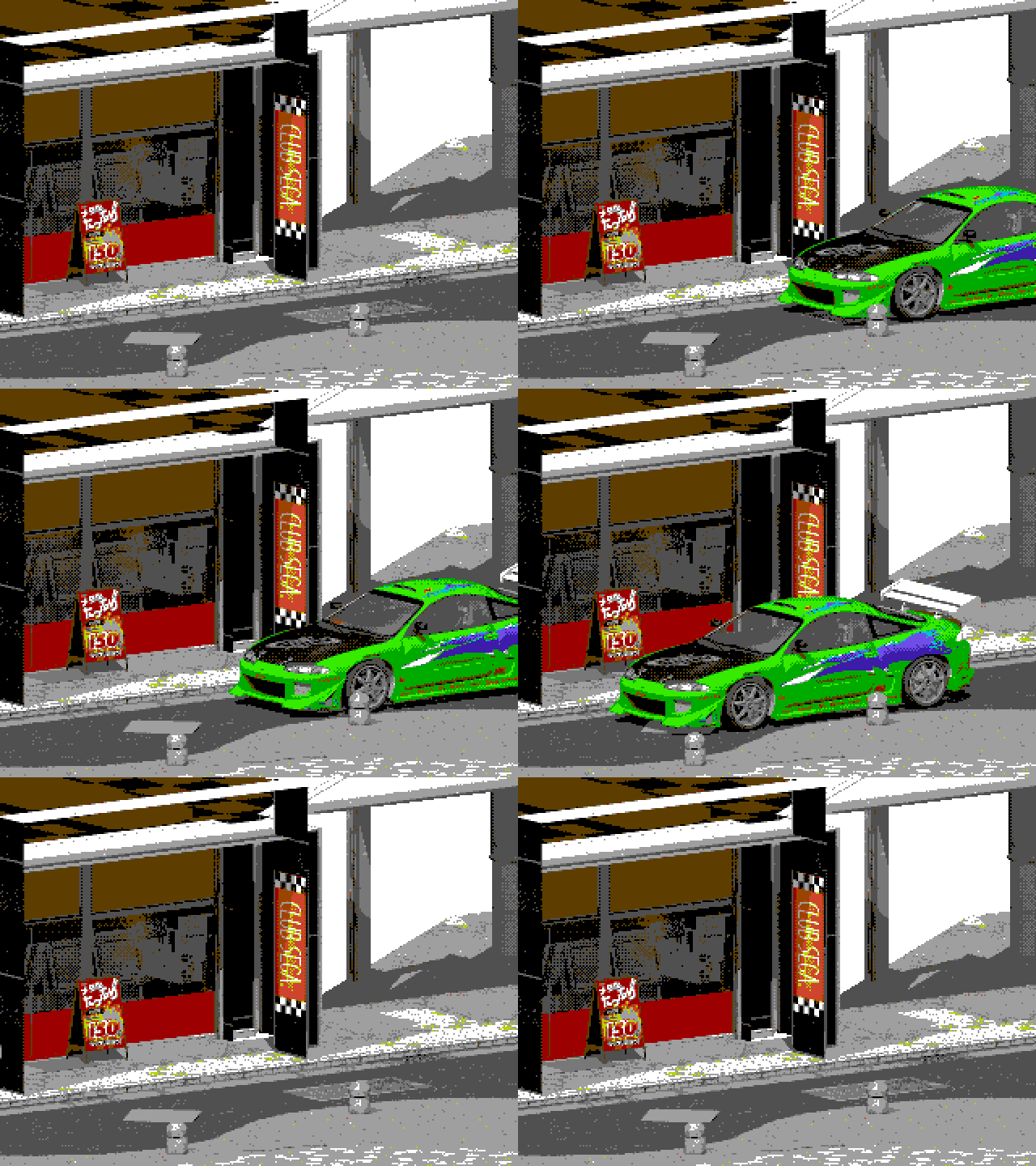
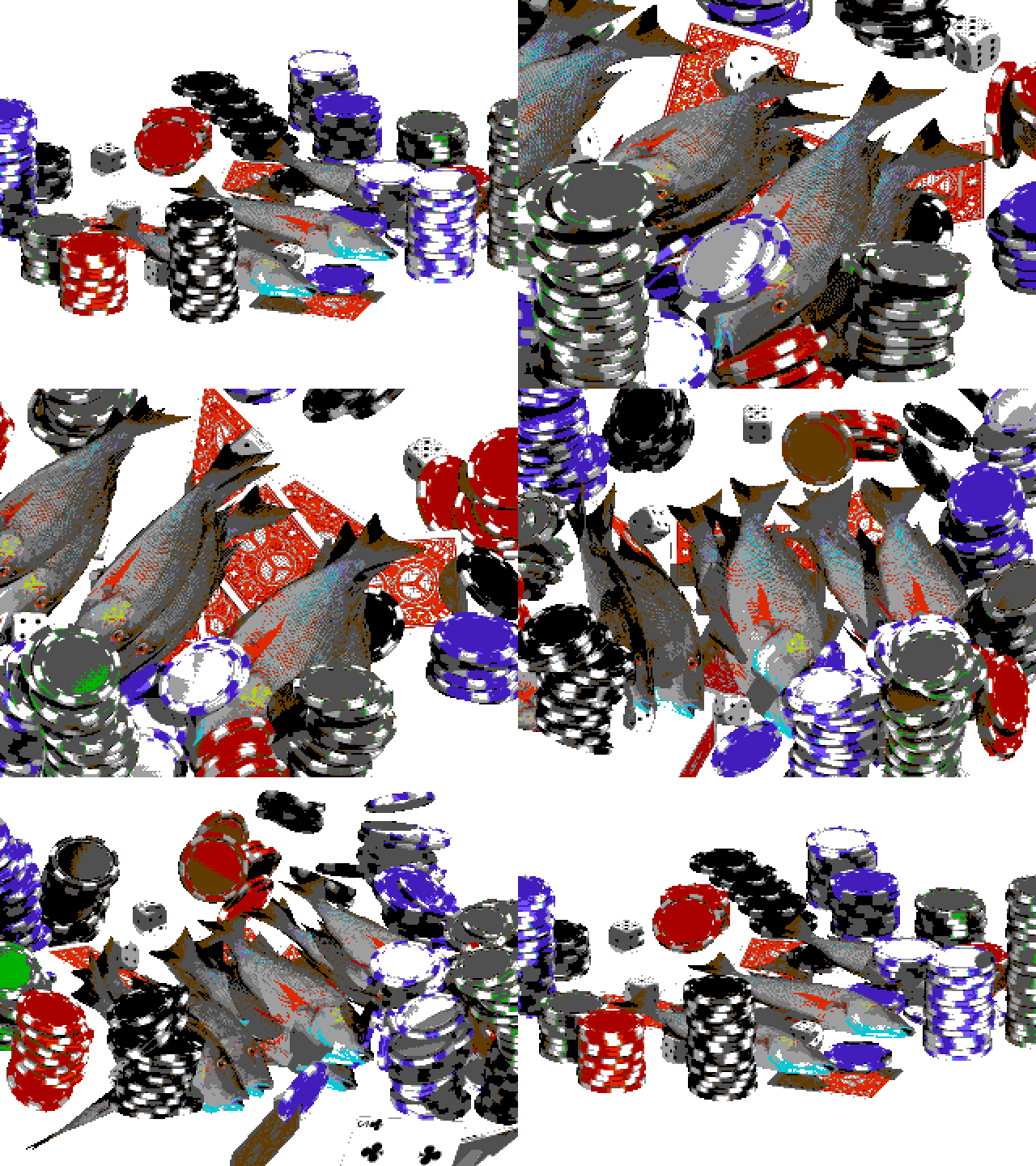
And then there are pieces like Fish and chips, a surreal everyday fragment that became the most actively contested auction in this recent chapter. Four bids, three collectors, thirty Tezos. What makes an image like that resonate is not grand mythology, but the uncanny warmth of something recognizable dropped into a digital loop that never turns off.
What the Auction Decides
On Tezos, an English auction is more than a price discovery mechanism. It is a shared temporal ritual.
When a new Intranet piece drops, a timer begins. Twenty-four hours. A collector places an opening bid. Another collector waits until the final hour. The timer resets by fifteen minutes with each last-second bid. A dialogue takes place entirely in cryptographic signatures.
Collectors like SecretariYat, Absurdeity, tiegenhof, akiradice, and 0xDK aren't just acquiring tokens. They are part of the network that gives the collection its cadence. Their competition is what animates the ledger, mirroring the very premise of Intranet: a collective space where people arrive from different coordinates, leave their mark, and carry a piece of the memory forward.
Over five hundred loops now. The server is still running.